
Trade is one of the noblest activities in Islam, provided it is conducted within the framework established by the Quran and Sunnah. Far from being a mere economic activity, lawful trade is an ibâda — an act of worship — that brings the believer closer to their Lord.
This article is based on the texts of the Quran, the Sunnah, and the sayings of authoritative scholars. For your specific personal or professional situation, consult a trusted scholar — rulings may vary depending on the circumstances.
The nobility of trade in Islam
Trade holds an honorable place in Islam. The Prophet ﷺ was once asked what gain was the best. He replied:
"That which a man earns by the labor of his hands and every lawful trade."
Reported by Al-Hakim in his MustadrakAllah, Exalted be He, has made trade lawful while setting clear guidelines to protect both parties and ensure justice in exchanges:
"O you who believe! Do not devour one another's property unlawfully, but [instead] let there be [lawful] trade by mutual consent."
Surah An-Nisa, verse 29The Prophet ﷺ himself engaged in trade before the revelation — with his uncle Abu Talib, and then with his wife Khadijah . His partner As-Sâ'ib ibn Yazîd testified about him:
"You were the best partner: you did not cheat me and you did not argue with me."
— As-Sâ'ib ibn Yazîd addressing the Prophet ﷺ · Ibn Majah, authenticated by Al-AlbânîThis testimony from a man who was still a disbeliever at the time illustrates how the Prophet's ﷺ commercial ethics transcended beliefs and commanded respect from all.
The 6 conditions for a valid transaction
For a sales contract to be valid according to Islamic jurisprudence (fiqh al-mu'âmalât), six conditions must be met simultaneously. They protect both parties and ensure that the transaction is free from any injustice or ambiguity.
-
1Mutual consent (at-tarâdhî) — The buyer and seller must freely and voluntarily consent to the transaction. Any coercion invalidates the contract. The Prophet ﷺ said: "Transactions are only validated by mutual consent."
-
2Capacity of the parties — Both contracting parties must be adults, of sound mind, and legally capable of entering into a transaction.
-
3Ownership of the good — The seller must be the legitimate owner of the good or have a valid mandate to sell it on behalf of someone else.
-
4Lawfulness of the merchandise — The exchanged good must be halâl. Anything that Allah has forbidden for consumption also has its price rendered unlawful, as reminded by the Prophet ﷺ.
-
5Knowledge of the price — The amount must be clearly defined and known to both parties before the conclusion of the contract, to avoid any disputes.
-
6Availability of the good — The merchandise must exist and be deliverable. One cannot sell what one does not yet certainly possess.
Practical rules for the Muslim merchant
Beyond the formal conditions of validity, Islam governs the merchant's daily conduct. The Prophet ﷺ promised an immense reward to those who conduct their trade righteously:
"The truthful and honest merchant will be with the Prophets, the truthful ones, and the martyrs."
Reported by At-Tirmidhi and Al-Hakim · authenticated by Al-Albânî in Sahih At-Targhib1. Disclose defects in the merchandise
The seller has an obligation to declare any hidden defects in the good they offer, even if it risks discouraging the buyer. This rule is absolute and allows no exceptions.
2. Do not defraud on merchandise
The Prophet ﷺ, passing by a merchant who was concealing damp goods under dry grain, put his hand into it, discovered the fraud, and said:
"Why did you not put it on top of the food so that people could see it? Whoever defrauds is not from me."
— Reported by Muslim3. Be frank and do not lie
Frankness is the key to blessing (barakah) in a transaction. Lying, even by omission, destroys it.
4. Show generosity and flexibility
Ease in transactions — whether in selling, buying, or collecting a debt — strengthens ties among Muslims and attracts divine mercy.
5. Avoid excessive oaths
6. Learn fiqh before engaging in trade
Scholars are unanimous on this point: it is incumbent upon every merchant to study the rules of fiqh al-mu'âmalât before engaging in trade. Operating in ignorance exposes one to committing forbidden acts unknowingly — which does not negate moral and spiritual responsibility.
According to scholars, anyone who enters trade truly needs two things: to place their trust in Allah while employing legitimate means, and to take money with generosity of spirit — without greed or anxiety.
The 3 rulings: harâm, makrûh, halâl
Scholars have established a precise classification of commercial practices. Here are the three categories as summarized by Islamic jurisprudence:
Practices that invalidate the transaction
The sale of illicit goods (alcohol, pork, idols…), deception and fraud concerning quality or quantity, riba (usury and interest), harmful abusive monopolization (ihtikâr), and selling what one does not possess with uncertainty of delivery are strictly forbidden. Whoever commits such acts is guilty of a great sin.
Practices to avoid without absolute prohibition
Repeatedly swearing to convince a buyer, selling or buying in mosques, or negotiating harshly and aggressively are practices that Islam strongly discourages. They are not absolutely forbidden, but they tarnish the transaction and can deprive it of blessing.
Lawful trade, a form of ibadah
Any trade based on mutual agreement, involving lawful goods, conducted with honesty and transparency is not only permitted but rewarded by Allah. Every honest transaction, every facility granted to a customer, every refusal to defraud becomes a good deed recorded in the believer's balance.
Strictly forbidden practices
Riba (usury)
Riba is one of the most serious prohibitions in Islam. It refers to any unjustified increase in an exchange of similar goods, or any interest charged on a loan. Allah has explicitly condemned it in the Quran:
"Allah has permitted trade and has forbidden riba."
Surah Al-Baqara, verse 275The sale of illicit goods
When Allah forbids a people from consuming something, He also forbids its price. Selling alcohol, pork, or any other prohibited good is haram, even if the transaction seems formally valid.
Deception and concealment
Any form of fraud — concerning quality, quantity, weight, or condition of the good — constitutes a betrayal of the buyer's trust and a violation of the rights due to them by Sharia.
Abusive monopolization (al-Ihtikar)
Deliberately hoarding essential goods to inflate their price at the expense of the population is haram. It is a form of injustice that Islam strongly condemns, as it harms the entire community.
The texts of Islamic Sharia agree on the necessity of keeping transactions free from anything illicit: fraud, deception, swindling, falsification, and concealment. These principles are non-negotiable.
The mindset of the believing merchant
Sheikh Al-Islam Ibn Taymiyyah رحمه الله emphasized two essential foundations for anyone engaging in trade:
First foundation: trust in Allah (at-tawakkul)
The Muslim merchant employs all legitimate means — product quality, good service, fair price, honesty — while knowing that success comes from Allah alone. This conviction frees him from anxiety and the temptation to defraud to "get by."
Second foundation: generosity of spirit (sakhawat an-nafs)
The merchant's soul must not be marked by greed, avarice, or covetousness. He earns money with generosity, without it becoming his greatest concern or the sole focus of his thoughts.
"O Allah, make not this world our greatest concern, nor the full extent of our knowledge."
Du'a of the Prophet ﷺThis vision transforms trade into an act of worship in its own right. Every honest transaction, every smile to a customer, every refusal to defraud becomes a way to draw closer to Allah and build one's Akhira.
May Allah facilitate lawful trade for us, preserve us from all that is forbidden in our transactions, and make our work a means of drawing closer to Him.
Fashion within lawful limits
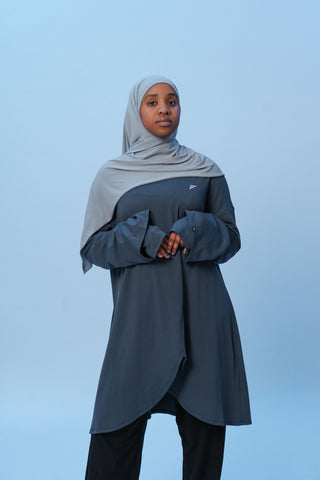
At Factivewear, every sale follows the same principles: transparency, honesty, and respect for the customer. Clothes designed for active women who refuse to choose between modesty and performance.
Discover the collection